
An off-grid label proves nothing unless the property can document the complete route from water source to storage, guest use, treatment, effluent destination, and removed sludge. Before booking, test that chain under two pressures: the driest operating period and maximum occupancy.
A credible off-grid desert lodge should disclose its complete water and wastewater chain
A desert lodge has a credible sustainability claim only when it documents the full water chain, including performance during drought and maximum occupancy. An equipment list or statement about low-flow fixtures is not enough.
The initial disclosure should identify the destination country, province or state, municipality, protected-area status, and authorities responsible for abstraction, drinking-water quality, wastewater, and waste transport. It should also state the operating season, accommodation count, maximum guests, resident staff, and highest daily occupancy.
A current process diagram should cover sources, tanks, treatment, distribution, wastewater collection, treatment units, reuse or discharge points, and final sludge destination. Installation, major-upgrade, inspection, and independent test dates should accompany it. The assessment must include kitchens, laundry, pools, staff housing, landscaping, and vehicle washing where present.
Which five documents should an eco-travel guest request first?
- The current water-abstraction, supply, or tanker-delivery authorization, or a verifiable summary naming the issuing authority.
- The latest potable-water laboratory report, including the sampling date, tested parameters, laboratory identity, and applicable local limits.
- The wastewater design capacity or operating permit, expressed as people served or volume treated per day.
- The latest treated-effluent test or septic inspection record, matched to the installed system.
- A written contingency plan for drought, source failure, contamination, power loss, treatment breakdown, and delayed sludge collection.
Jurisdiction matters. As one jurisdictional example, North Carolina’s well construction rules govern well location, construction, repair, abandonment, pumps, and certain large well systems. The rules connect those controls with public health and groundwater protection and define contamination by reference to state groundwater-quality standards. A lodge elsewhere must identify its own applicable rules.
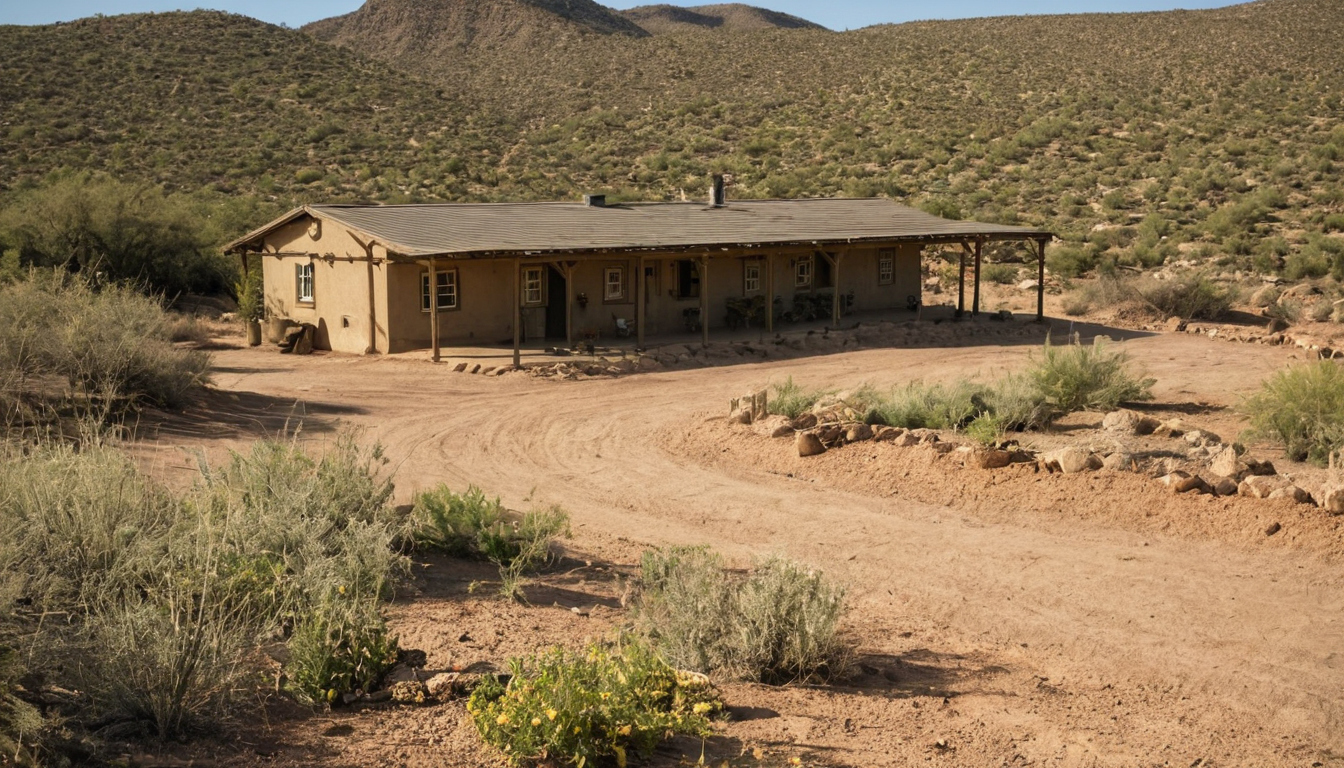
A credible off-grid desert lodge should disclose its complete water and wastewater chain shown with outdoor scale and terrain cues.
Which lodge answers are immediate warning signs?
- Undated certificates with no property address, audit scope, or validity period.
- Claims that groundwater is unlimited without metering, yield records, or dry-season evidence.
- A treatment description that omits hydraulic and occupancy capacity.
- Effluent-reuse claims unsupported by test results, irrigation plans, or discharge locations.
- Tanker or pump-out arrangements that do not identify authorized suppliers, contractors, or receiving facilities where local law requires them.
A qualified dryland water or sanitation specialist should review omissions involving source yield, treatment capacity, drainage exposure, or solids disposal. The next test is whether the source remains legal and viable through the driest period.
The desert lodge’s water source must be legal, measurable, and viable in the dry season
A borehole, rainwater system, municipal connection, or tanker supply must comply with current local permits and drought rules.
| Source | Authorization | Dry-season proof | Records | Water-quality risk | Contingency |
|---|---|---|---|---|---|
| Borehole | Permit holder, point, use, and limit | Yield assessment and pumping levels | Metered abstraction and monitoring trends | Salinity, chemicals, and microbes | Reduced pumping or alternative source |
| Rainwater | Local collection and potable-use approval | Rainfall record, catchment, storage, and dry interval | Tank levels and treatment logs | Roof debris and microbial contamination | Authorized backup supply |
| Municipal | Commercial connection and allocation | Restriction and outage history | Bills, meter readings, and occupancy | Distribution or storage contamination | Protected onsite storage |
| Tanker | Authorized supplier and documented origin | Drought availability and road access | Delivery dates, volumes, and frequency | Source and tank hygiene | Second supplier and reserve storage |
Does the lodge’s water permit cover tourism use and maximum occupancy?
The permit should cover the present bed count, operating season, and commercial uses, including accommodation, kitchens, laundry, pools, staff housing, and irrigation. Compare its daily or annual limit with metered peak withdrawal, and check whether the lodge expanded after approval.
Drought can change what remains lawful. The San Antonio Water System rules, for example, link staged restrictions to Edwards Aquifer conditions. That framework applies only within its jurisdiction, but it shows why guests should request current local restrictions. South Carolina’s published drought page describes proposed amendments, not a current lodge-specific order.
Could lodge abstraction affect groundwater, springs, communities, or wildlife water sources?
A hydrogeological review should map connections to springs, pans, river reaches, wetlands, community wells, and wildlife water points. Request the recharge method and assessment date, recent static and pumping levels, salinity trends, and monitoring-authority records. North Carolina’s rules, as a jurisdictional example, define monitoring wells as installations used to measure groundwater levels or obtain groundwater information.
The desert lodge’s water source must be legal, measurable, and viable in the dry season shown as a landscape planning reference.
These effects should also be considered while checking conservation claims before a wildlife or desert trip. Once source legality and dry-season effects are clear, a peak-day balance can test operational demand.
A peak-occupancy water balance reveals whether lodge conservation claims are operational
The useful metric is a documented daily water balance for peak occupancy during the dry season. Annual averages can conceal shortages, excessive consumption, and dependence on emergency deliveries.
How should travelers calculate a lodge’s peak-day water demand?
Request metered monthly use for the latest complete operating year, matched with peak-day and peak-month occupancy. Compare guest-night consumption with a second figure covering staff and non-room operations, using one consistent unit.
A peak-occupancy water balance reveals whether lodge conservation claims are operational shown with outdoor scale and terrain cues.
| Balance component | Calculation |
|---|---|
| Essential demand | Maximum guests and resident staff × justified per-person demand |
| Operational demand | Kitchen, laundry, cleaning, cooling, vehicles, and treatment losses |
| Discretionary demand | Pools, spas, and irrigation, listed separately |
| Required supply | Essential + operational + discretionary demand + contingency |
Storage should be stated as days of essential demand without resupply. Reused water must count once, not as both new supply and avoided demand. Ask for meter-reading frequency, leak-response records, and benchmarks matched to climate, service level, amenities, and accounting boundaries. This complements assessing desert ecotourism carrying capacity.
Do pools, laundry, cooling, and landscaping fit the lodge’s stated water budget?
Pool records should identify surface area, evaporation control, backwashing, refills, and seasonal closure. Laundry disclosures should cover location, load frequency, linen policy, and outsourced consumption. Cooling records should show evaporation or blowdown demand during hot weather. Landscaping records should identify irrigated area, plant origin, irrigation method, schedule, and source.
Once peak demand is credible, the wastewater system must prove that it can accept the resulting flow.
The wastewater system must handle full occupancy, variable loads, and maintenance interruptions
A wastewater claim is credible only when the installed system is approved for the site, sized for maximum hydraulic and organic loads, and backed by a workable response to power loss, equipment failure, salinity, and seasonal occupancy.
The wastewater system must handle full occupancy, variable loads, and maintenance interruptions shown with outdoor scale and terrain cues.
Is the lodge wastewater plant rated for guests, staff, kitchens, and occupancy surges?
- Confirm the design basis: Request the system type, process flow, installation date, design standard, commissioning report, and approving authority.
- Count every connected user: Include maximum guests, resident staff, staff housing, guides, day visitors, kitchens, and laundry rather than room count alone.
- Compare real and rated loads: Check documented hydraulic and organic capacity against peak flows and occupancy assumptions.
- Inspect performance evidence: Request permit limits, sampling points, test results, inspections, and records of exceedances, odors, overflows, bypasses, or failures.
- Check kitchen controls: Commercial kitchens need suitable pretreatment, grease-trap capacity, inspection schedules, and disposal records.
Can intermittent lodge occupancy destabilize biological treatment?
- Ask for instructions covering minimum loading, seasonal shutdown, restart, and recommissioning.
- Review operator logs from closures, low occupancy, and rapid occupancy increases.
- Verify backup power, alarms, spare parts, trained operators, and breakdown procedures.
- Seek an independent assessment where heat, freezing nights, salinity, biomass loss, or abrupt loading could impair treatment.
Where do septic solids and treatment sludge ultimately go?
- Request the removal schedule and latest pump-out or sludge-service record.
- Verify required carrier authorization, receiving-facility acceptance, and the final treatment or disposal route.
- Check the contingency for inaccessible roads, full sludge storage, or an unavailable contractor.
Capacity is only half the decision. Treated effluent must also remain controlled after it leaves the plant.
Treated effluent reuse is sustainable only when water quality and habitat exposure are controlled
Wastewater reuse can reduce freshwater demand, but the lodge must match effluent quality to the authorized use, prevent human exposure, limit soil salinity, and keep nutrients and pathogens away from groundwater, washes, springs, and wildlife drinking sites.
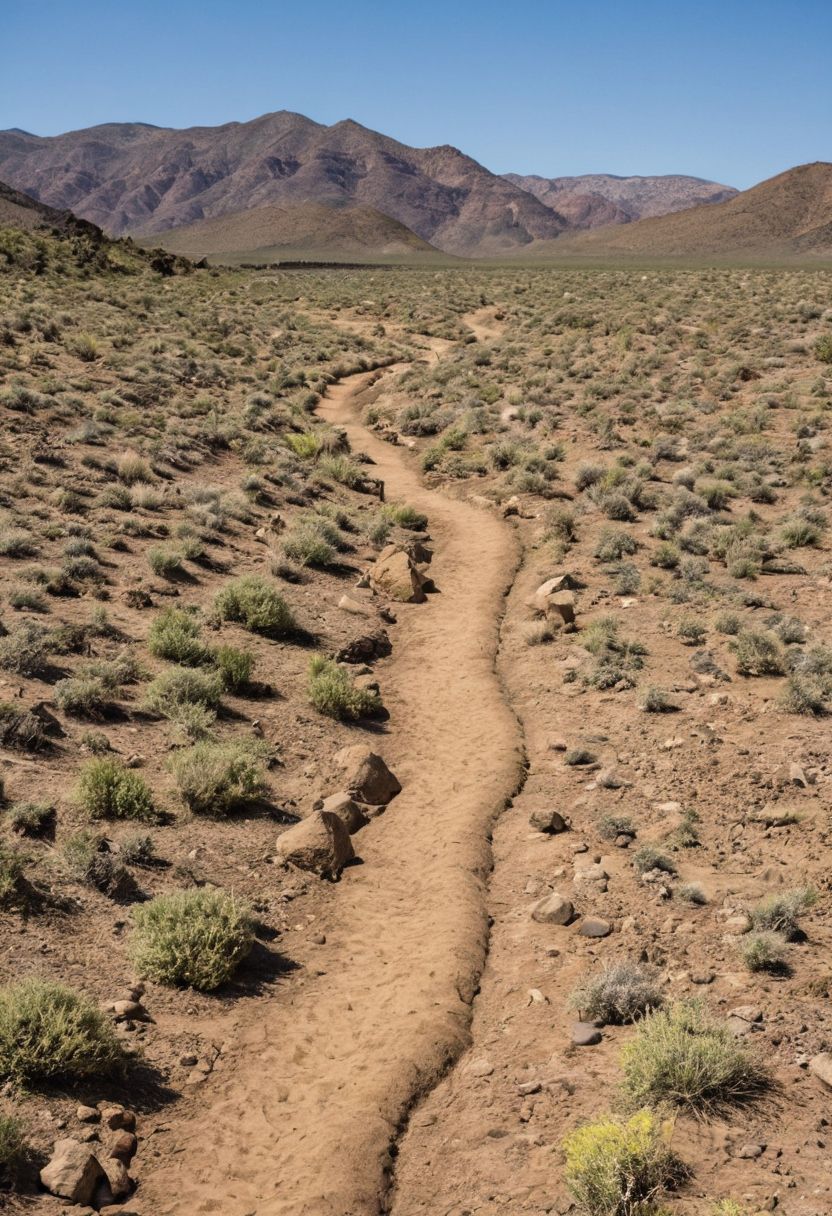
Treated effluent reuse is sustainable only when water quality and habitat exposure are controlled shown with outdoor scale and terrain cues.
Could lodge effluent reach a desert wash or groundwater after a storm?
Request a site map locating treatment units, irrigation or infiltration areas, wells, buildings, property boundaries, ephemeral channels, flood paths, and wildlife water sources. The property should identify the permitted reuse category, water-quality limits, monitoring schedule, and final effluent destination.
Dry ground is not proof of safe disposal. A qualified specialist should assess soil permeability, groundwater depth, slope, setbacks, flood protection, and drainage direction. Post-storm records should document ponding, erosion, overflow, or damaged infrastructure.
Does wastewater reuse protect native vegetation and wildlife behavior?
Effluent testing should cover salinity, sodium, nutrients, and pathogens relevant to the reuse method. Seasonal irrigation demand must be compared with effluent production, including storage or lawful disposal during low-demand periods. Estimating irrigation demand in dry climates can expose an oversized reuse claim.
Plant lists, soil trends, wildlife observations, and access controls should show that reuse supports suitable vegetation without invasive plants or artificial drinking sites.
Book the desert lodge only when independent records support its operational claims
The final booking decision should give more weight to dated permits, meter records, laboratory results, treatment capacity, failure plans, and habitat safeguards than to sustainability labels.
Book the desert lodge only when independent records support its operational claims shown as a landscape planning reference.
Which evidence deserves the most weight before an eco-travel booking?
Rank regulator records and accredited laboratory reports first, followed by independent audits, disposal manifests, operator logs, written policies, and marketing statements. Confirm the property name, address, operator, scope, dates, and validity. Certification can add confidence when its current scope covers water and wastewater, but it cannot replace local compliance or site-level evidence.
What is the final water and wastewater booking checklist?
| Check | Record required | Decision trigger |
|---|---|---|
| Source and drought reliability | Authorization, meters, dry-season plan | Do not book without legal supply |
| Peak demand and potable quality | Capacity calculation, current tests | Clarify gaps or choose a lower-demand season |
| Treatment, effluent, and sludge | Design rating, results, disposal manifests | Reject inadequate capacity or undocumented disposal |
| Flood, habitat, and failures | Site plan, incident log, contingency plan | Reject unresolved exposure |
Record the evidence received, dates, responsible entities, unresolved questions, and warning signs on one page. If material claims remain unsupported, use flexible cancellation terms, choose accommodation with fewer water-intensive amenities, or book another property.
Frequently asked questions
Is tanker-delivered water a credible option for an off-grid desert lodge during drought?
Yes, if the lodge documents the authorized source, supplier, delivery volumes, potable-water controls, road reliability, reserve storage, and a contingency for regional shortages.
How can a traveler tell whether a lodge wastewater plant is large enough for full occupancy?
Compare its approved hydraulic and organic design loads with maximum guests, staff, kitchens, laundry, day visitors, and measured peak flows. Room count alone is inadequate.
Are composting toilets always more sustainable than septic systems at remote desert lodges?
No. Suitability depends on approval, user capacity, moisture and temperature conditions, maintenance, pathogen controls, and the lawful handling of finished material and liquids.
Does an eco-certification prove that a lodge’s water source and wastewater discharge are safe?
No. Check the certificate’s scope, validity, audit findings, and standard version, then verify local permits, laboratory results, operating records, and discharge conditions separately.
What should a guest do if a lodge refuses to provide permits, test results, or treatment-capacity information?
Treat the refusal as unresolved risk. Ask the relevant authority or certification body for public records where available, retain flexible booking terms, or select another lodge.