
A desert garden saves water only when the proposed plant area, plant type, and irrigation system fit the local water budget
Will this proposed garden stay inside the water budget during the hot month? A desert garden conserves water only if its expected irrigation demand is lower than the site’s previous or allowable outdoor water use under local climate, soil, and regulation conditions.
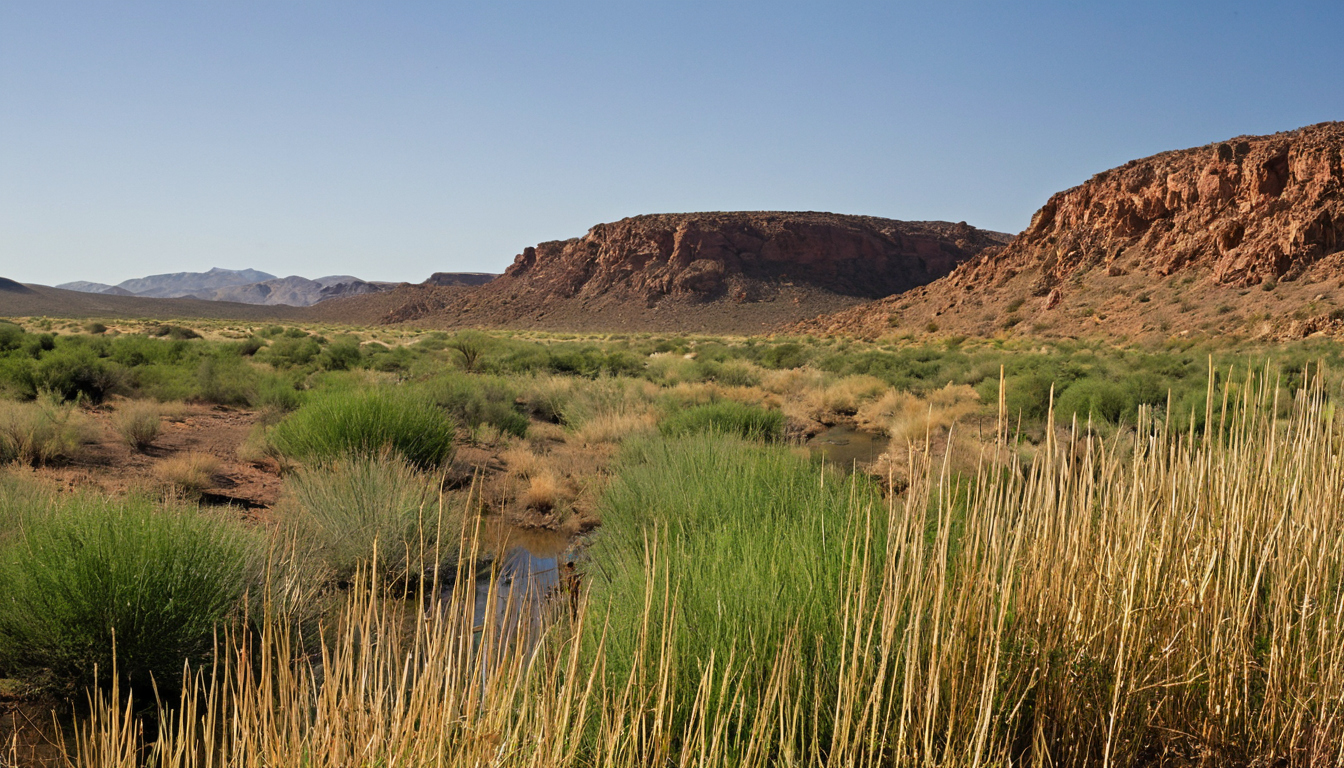
A desert garden saves water only when the proposed plant area, plant type, and irrigation system fit the local water budget shown with outdoor and conservation detail for context.
Outdoor water conservation also belongs in the same household planning frame as water-conscious design choices inside arid-climate homes: the decision is not whether a feature looks dry-climate appropriate, but whether the whole property can operate within a realistic water limit.
What decision should the pre-plant irrigation estimate answer?
- Climate context: name the setting first, such as hot desert, coastal desert, high desert, or semi-arid inland garden.
- Baseline: compare the proposal with turf, gravel, bare soil, ornamental shrubs, or mixed planting already on site.
- Limit: set a peak-month cap from a household target, utility allowance, rebate rule, or local watering restriction.
- Area: measure only irrigated square metres or square feet, not the whole plot.
- Property type: separate new construction, retrofit, rental, commercial frontage, and household garden constraints.
Which desert garden choices often look sustainable but still use too much water?
Oversized planting beds, high-water ornamentals, mixed hydrozones on one valve, and permanent establishment-style watering can erase expected savings. The Desert Botanical Garden notes that established plants should be adjusted seasonally, and winter irrigation may be turned off when winter rain occurs. The next step is to turn that decision into a calculation using evapotranspiration, plant need, area, and irrigation efficiency.
How to calculate a pre-plant irrigation estimate using evapotranspiration, plant water need, area, and irrigation efficiency
The core desert garden calculation estimates how much water the proposed planting will lose to climate demand, then adjusts for plant type, planted area, rainfall that actually reaches roots, and irrigation system efficiency.
What is the basic irrigation requirement formula for a desert garden?
Gross irrigation = ((ETo × plant factor × area) minus effective rainfall) ÷ irrigation efficiency, with rainfall converted to the same area unit before subtraction. If ETo is in millimetres, 1 millimetre over 1 square metre equals 1 litre. If ETo is in inches, 1 inch over 1 square foot equals about 0.623 gallons.
The calculation estimates gross irrigation, not perfect plant uptake. Net plant water need is the climate demand after plant factor and rainfall. Gross irrigation is higher because emitters clog, pressure varies, wind moves spray, and some water lands outside the active root zone.
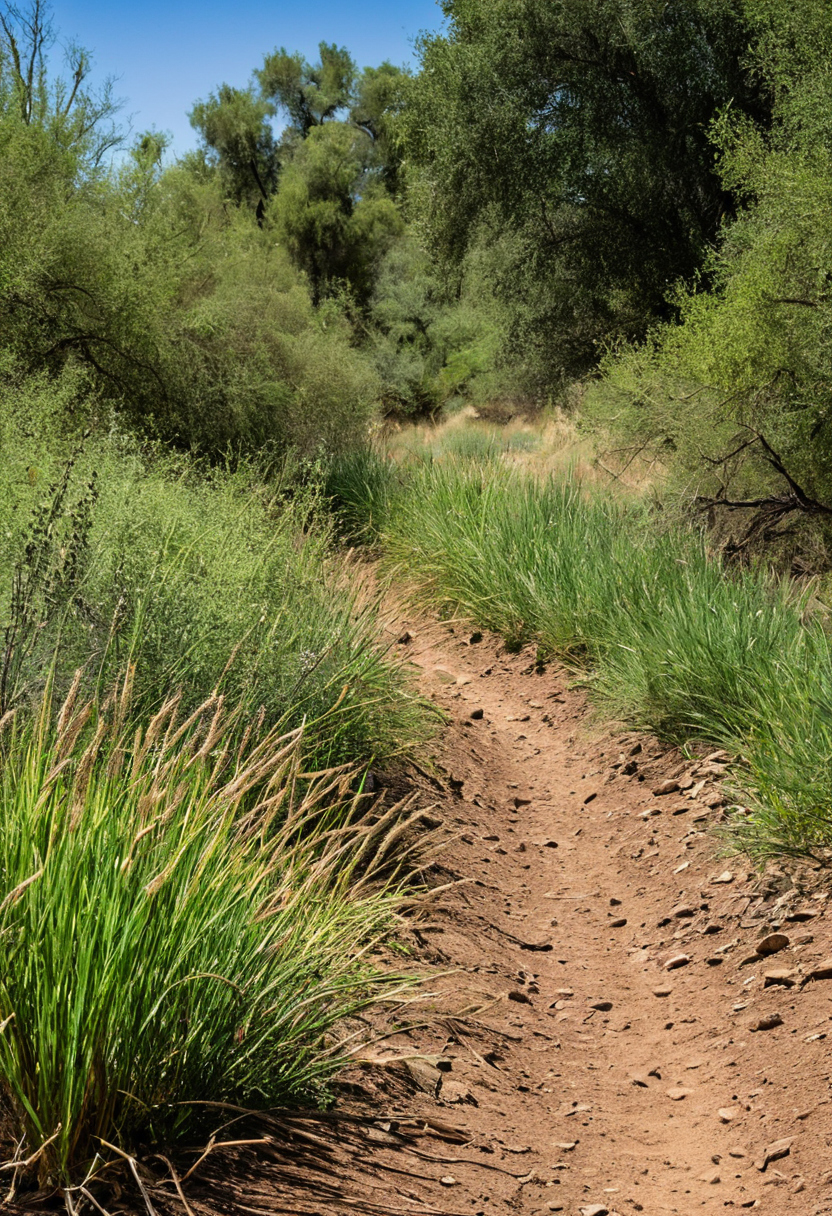
How to calculate a pre-plant irrigation estimate using evapotranspiration, plant water need, area, and irrigation efficiency shown in a natural landscape context.
Before interpreting an outdoor estimate, check for leaks that distort household water use. The California Native Plant Society cites an Environmental Protection Agency estimate that one in ten homes has a leak of 90 gallons per day, equal to almost 33,000 gallons per year.
Where should homeowners find local evapotranspiration data before planting?
UC ANR defines evapotranspiration as water moving from soil and plants into the atmosphere, and explains that reference ET, or ETo, is calculated from local weather data. Sunlight, air temperature, humidity, and wind drive ET, so a coastal, upland, urban heat-island, or windy desert-edge site should not borrow a generic regional average.
Use monthly ETo from a meteorological agency, agricultural extension network, irrigation district, university climate tool, or water authority. California gardeners can check CIMIS through UC ANR guidance, while TexasET publishes station-level ETo, weather summaries, rainfall, and planning inputs such as average ETo, crop coefficients, turf coefficients, and system efficiencies.
Scientific irrigation work uses the same logic at higher precision. A PLOS One paper available through PubMed Central describes reference evapotranspiration as important for irrigation scheduling, notes that lysimeters can measure ETo accurately but are costly and complex, and identifies weather-station meteorological models as a practical alternative in many contexts.
How should plant water-use categories be assigned before the plant list is final?
| Input | What to use before planting | Why it matters | Where to verify |
|---|---|---|---|
| ETo | Peak-month local reference ET | Sets the climate demand for the hydrozone | Weather station, extension network, irrigation district |
| Plant factor | Low, moderate, or high water-use category | Prevents mixing cactus, shrubs, turf, and vegetables in one schedule | Regional plant list, botanical garden, water agency |
| Area | Square metres or square feet by hydrozone | Large low-water beds can outuse small moderate beds | Scaled plan or measured site |
| Effective rainfall | Only rainfall likely to soak into the root zone | Seasonal storms may run off compacted or sloped soil | Local rainfall data and site drainage check |
| Irrigation efficiency | Expected efficiency for drip, bubbler, spray, or hand watering | Converts plant need into water applied at the meter | Irrigation designer, water agency, system audit |
The Desert Botanical Garden recommends evaluating sun exposure, soil profile, drainage after rain, mature plant space, and whether the watering system can support different plant forms before planting. Native plants may need less water where they suit the local desert context, but “native” should still be checked against soil, elevation, rainfall pattern, and establishment needs. Recently planted landscapes may need deep watering every 14 to 21 days without rain, so the first-year estimate should be separate from the mature-garden estimate.
The formula gives the volume to plan for; soil texture and infiltration decide how often that water can be applied without runoff, crusting, or root-zone waste.
Soil texture and infiltration decide how often a desert garden can receive the calculated water
A desert garden water budget gives a volume, but soil conditions decide how that water can be applied without runoff, deep drainage, salt accumulation, or plant stress. In sandy, compacted, calcareous, clayey, or shallow desert soils, the same monthly water amount may require different run times, cycle spacing, and amendment decisions.
How can a simple infiltration test change the irrigation plan before planting?
An infiltration check turns the water budget into a practical schedule. Before buying plants, clear surface debris, wet a small test area, apply a measured amount of water to a shallow test basin or ring, and watch whether water enters the soil evenly, ponds, runs toward paving, or disappears too quickly for the planned root zone.
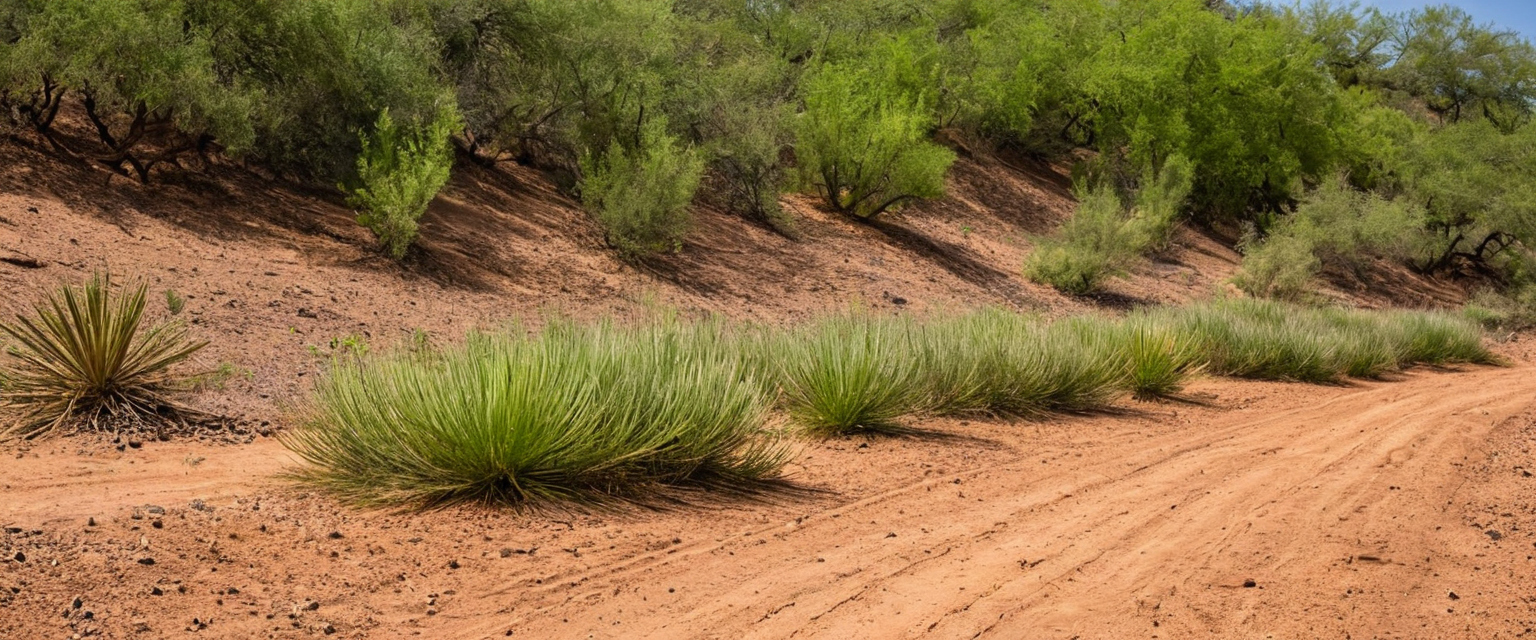
Soil texture and infiltration decide how often a desert garden can receive the calculated water shown with outdoor and conservation detail for context.
- Fast-draining sand: shorten run times, split irrigation into more careful cycles, and choose plants that tolerate dry root zones between waterings.
- Compacted fill or surface crust: loosen only where roots will grow, correct grading, and avoid assuming drip water will spread sideways.
- Clay loam or calcareous hard layers: use slower application, check for perched water, and avoid deep watering that cannot drain through the profile.
- Slope or hardscape edges: plan cycle-and-soak irrigation so water does not leave the planting zone.
- Salinity, hard water, or reclaimed water: check local guidance because salts can concentrate where evaporation is high and leaching is poor.
When do mulch, compost, gravel, or soil amendments help water conservation in arid soils?
Mulch and amendments help only when they solve the site’s actual limit. Organic mulch can reduce surface evaporation around compatible shrubs and trees, while mineral mulch can protect bare soil where organic mulch breaks down too quickly. Compost can improve water holding in sandy or low-organic soils, but over-amending a planting hole can trap roots in a small wet pocket.
Gravel-only areas are not automatically water conservation landscapes. Gravel can suppress dust and protect soil, but broad dark or reflective surfaces may increase heat around plants, and weed fabric can reduce infiltration as sediment accumulates. For higher-control sites, Desert Botanical Garden notes that smart irrigation and sensing platforms can manage schedules by weather, flag mechanical failures, report water use, and measure soil moisture, salinity, and soil temperature. The next decision is which irrigation method can apply the calculated water at the rate the soil can accept.
Drip, bubbler, spray, and hand-watering systems conserve water only when matched to plant type and maintenance capacity
The best irrigation method for a desert garden depends on whether the site uses trees, shrubs, groundcovers, turf, containers, or edible beds, and on who will maintain the system. Drip and bubblers can reduce losses in arid landscapes, but poor filtration, leaks, clogging, overspray, or wrong scheduling can erase the savings.
Which irrigation method is usually best for desert shrubs, trees, turf, and containers?
Match the irrigation method to the hydrozone before buying plants. A low-water tree, a cactus bed, a vegetable box, and a small turf panel should not share one valve unless their water demand and watering interval are genuinely similar.
| Planting type | Usually suitable method | Main diagnostic before installation |
|---|---|---|
| Desert shrubs and perennials | Point-source drip or inline dripline | Check filtration, pressure regulation, emitter spacing, and access for flushing clogged lines. |
| Trees | Bubblers or multiple drip emitters | Design for a widening root zone, not a single wet spot at the trunk. |
| Turf or dense groundcover | Subsurface drip or carefully zoned spray | Spray remains common, but wind, overspray, runoff, and mixed planting zones make losses more likely. |
| Containers and edible beds | Drip, microspray, or careful hand-watering | Confirm that someone will inspect emitters, salt buildup, and dry pockets during hot weather. |
How should irrigation scheduling change between establishment and mature desert planting?
Establishment scheduling should start as a temporary water demand, not as the permanent setting. After roots spread, reduce frequency, widen the wetted area for woody plants, and adjust run times by season. In regions covered by TexasET, station data can support current and average evapotranspiration checks and watering recommendations.
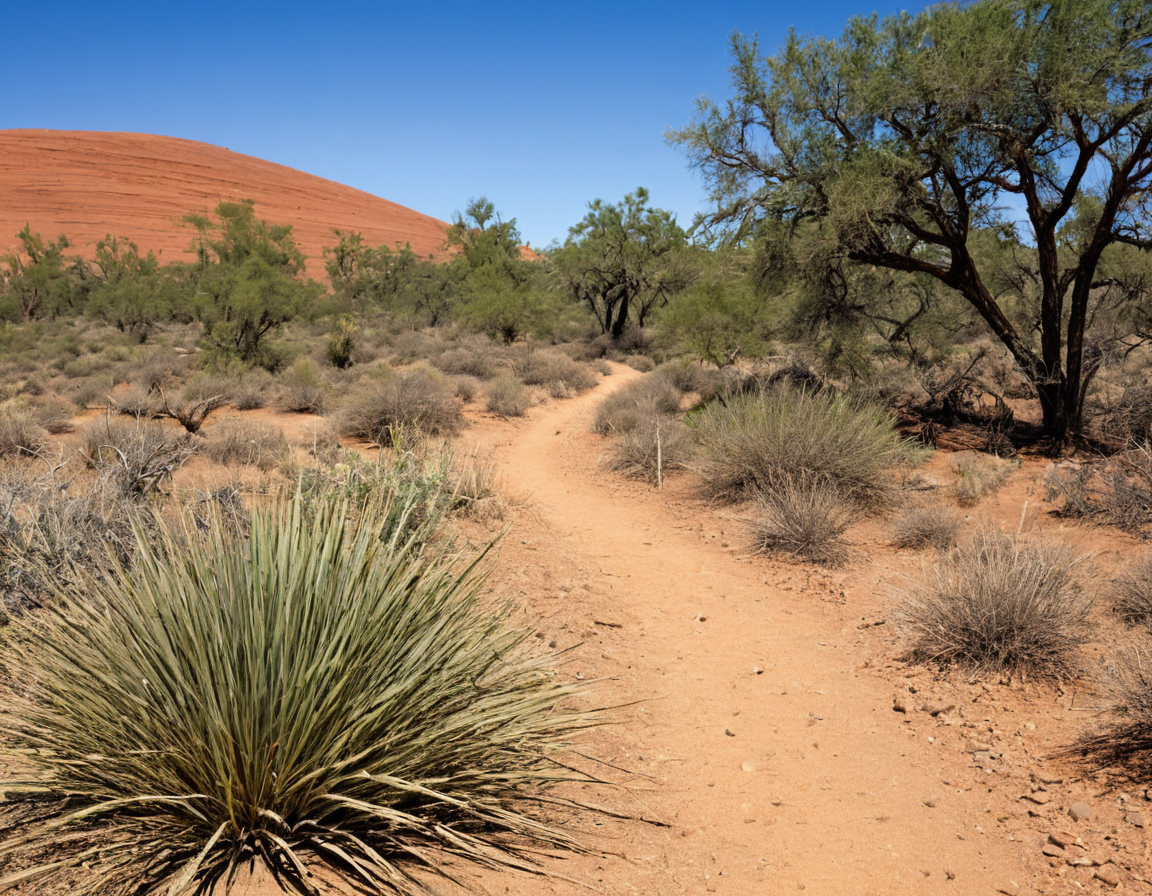
Drip, bubbler, spray, and hand-watering systems conserve water only when matched to plant type and maintenance capacity shown with outdoor and conservation detail for context.
Leak checks belong in the irrigation plan because a small fault can turn a careful estimate into waste. The California Native Plant Society describes using a water meter’s low-flow indicator when indoor water and irrigation are off, then checking again after 15 minutes. Once the method and schedule look plausible, the next test is a side-by-side water budget for turf, low-water planting, and gravel-only design on the same site.
A worked pre-plant comparison should test turf, low-water planting, and gravel-only design against the same desert site
A useful desert garden estimate compares design options under the same climate, area, soil, and irrigation assumptions. Test a conventional turf area, a low-water native or climate-adapted hydrozone, and a gravel-dominant layout before choosing plants or materials.
A worked pre-plant comparison should test turf, low-water planting, and gravel-only design against the same desert site shown with outdoor and conservation detail for context.
What inputs belong in the desert garden water-budget table?
Use one unit system for the whole comparison. For an imperial worksheet, use square feet, inches of peak-month ETo, inches of effective rainfall, and gallons for the final gross irrigation estimate.
| Input | Use in the comparison |
|---|---|
| Hydrozone and area | Turf, low-water shrubs or trees, groundcover, gravel-only area |
| ETo period and plant factor | Same hot-month ETo, different plant factors by zone |
| Irrigation efficiency | Spray for turf, drip or bubbler for planting, none for unirrigated gravel |
| Seasonal note | Separate establishment-year watering from mature-year demand |
Why is gravel-only landscaping not automatically the best water conservation choice?
Gravel can reduce irrigation demand, but a gravel-dominant yard can also increase reflected heat, shed runoff toward paving, compact soil, collect dust, and require weed control or material replacement. A low-water planting zone may use some irrigation while adding shade, root structure, and habitat value. The next check is whether local rules, rebates, and maintenance risks change the preferred design.
Local restrictions, rebates, plant rules, and failure risks can change whether a desert garden plan is worth installing
A desert garden estimate is incomplete until local watering rules, rebate terms, plant restrictions, HOA requirements, and maintenance risks have been checked. In water-stressed arid communities, efficient design can still fail if allowed watering days, establishment limits, discouraged species, or neglected irrigation equipment are ignored.
Which local rules should be checked before buying desert garden plants?
Local compliance starts with the municipality, water district, HOA, and any regional landscape authority. Check whether rules differ for new landscapes, retrofits, residential sites, commercial sites, turf removal, tree replacement, plant coverage, hardscape area, and drip conversion. The California Native Plant Society treats drought and efficient water use as part of everyday gardening context, which is a useful reminder to verify local rules before spending money on plants or irrigation parts.
Local restrictions, rebates, plant rules, and failure risks can change whether a desert garden plan is worth installing shown in a natural landscape context.
Rebate programs often require before photos, approved plant lists, irrigation plans, mulch or permeable-surface details, receipts, and final inspection. A plant that suits the climate can still be a poor purchase if it appears on a local invasive, discouraged, or prohibited list. This is the outdoor version of climate-adaptive planning for desert living: design around heat, water limits, maintenance, and rules before materials are ordered.
What maintenance risks make irrigation estimates inaccurate after installation?
Maintenance risk turns a paper water budget into actual outdoor use. Clogged emitters, cut dripline, overspray onto paving, pressure mismatch, controller errors, dead plant replacement, and unreported leaks all change the assumed irrigation efficiency. Set an inspection routine during the active irrigation season, read the meter or flow report after repairs, and keep spare emitters matched to the installed system. After the rules and failure points are known, the remaining test is simple: does the garden meet the water cap in the hottest realistic month?
The final pre-plant decision is whether the desert garden meets a water cap during the hottest realistic month
The most practical final test for a desert garden is whether the design stays within the household, project, or regulatory water cap during the highest-demand month, not the annual average. If the peak-month estimate is too high, reduce irrigated area, change hydrozones, improve efficiency, or choose lower-water plants before buying.
What should be changed first if the desert garden estimate is too high?
Start with the biggest controllable driver: irrigated area. Shrink thirsty zones, separate trees from shrubs and groundcovers, and phase planting if the first-year establishment demand exceeds the monthly cap.
Next, lower plant water categories where shade, erosion control, habitat value, or HOA coverage rules still allow a living landscape. Then improve irrigation efficiency with pressure regulation, matched emitters, leak checks, and a controller schedule based on local ETo.
Peak-month testing matters because UC ANR notes that California ETo is generally highest in July, and desert locations can have summer daily ETo rates of 0.3 inches or higher. The changed plan is simple: plant only the design that survives the hottest realistic month on paper.
The final pre-plant decision is whether the desert garden meets a water cap during the hottest realistic month shown with outdoor and conservation detail for context.
FAQ
These answers condense the pre-plant workflow into quick checks for homeowners, designers, and small-site landscape planners in arid or semi-arid regions.
How do you calculate the water requirement for irrigation before planting a desert garden?
Use gross irrigation = ((ETo × plant factor × area) minus effective rainfall) ÷ irrigation efficiency. Run the calculation by hydrozone, not by the whole property, and use the hottest realistic month before approving the plant list.
What is the best irrigation method for water conservation in desert landscaping?
Point-source drip or inline drip often suits shrubs and perennials, while trees usually need bubblers or multiple emitters that can wet a widening root zone. Turf and dense groundcovers need separate design because spray losses, wind drift, and runoff can be high in dry climates.
How often should a newly planted desert garden be watered during establishment?
Establishment watering depends on species, soil, season, and local rules. As one practical reference, the Desert Botanical Garden says recently planted landscape plants should be deep watered every 14 to 21 days if it does not rain, but local plant guidance should set the final schedule.
Is a gravel-only yard better for water conservation than native or climate-adapted planting?
A gravel-only yard may use little or no irrigation, but it is not automatically the best conservation outcome. Gravel can increase heat, shed runoff, collect dust, and reduce soil function, while a carefully sized low-water planting zone can provide shade, habitat, and infiltration with a controlled irrigation budget.
What does the 1/2/3/2:1 watering method mean, and when is it appropriate in a dry-climate garden?
The 1/2/3/2:1 wording is not a universal irrigation standard. Some local guides use similar shorthand for step-down establishment watering, but the exact meaning must come from the local extension service, water agency, nursery guidance, or landscape professional for the plant type and soil. Use it only when the schedule matches local ETo, plant maturity, and infiltration conditions.